Help us collect data on which bird species eat periodical cicadas in 2024! Sign up HERE to learn more about opportunities to join our research.
The last time Brood XIII 17-year and Brood XIX 13-year periodical cicadas emerged in the same year, the United States was making a minor land deal called the Louisiana Purchase in 1803! The Great Southern Brood (XIX) will emerge in parts of 16 states in the Midwest and South, whereas Brood XIII will emerge within a more restricted region covering parts of Iowa, Indiana, Illinois, and Wisconsin. Thus, there is a chance to see all seven species of Magicicada, although there won’t be much spatial overlap and it is very difficult to distinguish the 13-yr and 17-yr species by appearance or chorus.
Because cicadas come out so infrequently, there are many big questions about them yet to be answered. We are studying the ways that the cicada emergence disrupts local food webs as birds shift their diet to this abundant food source. We think that this shift will allow other insects to thrive and eat more leaves on local trees. We want to know how many bird species are changing their feeding behavior and diet. From prior research on Brood X in 2021, we learned that over 80 bird species in the state of Maryland alone were willing to taste cicadas. Knowing which birds are eating cicadas will help us understand which plants and insects will be affected during the emergence. Join in this scientific discovery by watching birds and sharing your observations with us!
Methods
- To build a picture for how many bird species join in the feast, we are interested in all positive sightings of birds consuming periodical cicadas.
- Find a spot to observe birds where there are periodical cicadas present. When you identify a bird capturing a cicada, record the date, location, and the bird species to the best of your ability. See details below on how to format these for use in data analysis.
- You can choose a single bird to quietly observe and follow, or you can take note of an opportunistic sighting. Once the bird captures a cicada, you have the data we need!
- Try to observe birds that you can identify with certainty. For tips identifying common backyard birds, please check out our guide. You can still enter birds if you are less than certain by indicating your level of confidence in the data form.
- If the bird only eats part of the cicada before discarding, that still counts and should be recorded. Live cicadas, dead cicadas, nymphs, and adults all count as cicadas. If a bird flies off with a cicada in its beak, this still counts as a feeding event and should be tallied.
- When you have finished observing a bird foraging event, record the habitat and the foraging location, along with any interesting behaviors to enter as notes.
- If the bird does not capture a cicada during your observation time, do not record any data for that observation.
- Watch as many birds as possible during the cicada emergence, while avoiding multiple observations for a single individual. The more confirmed observations of different species we can gather, the better!
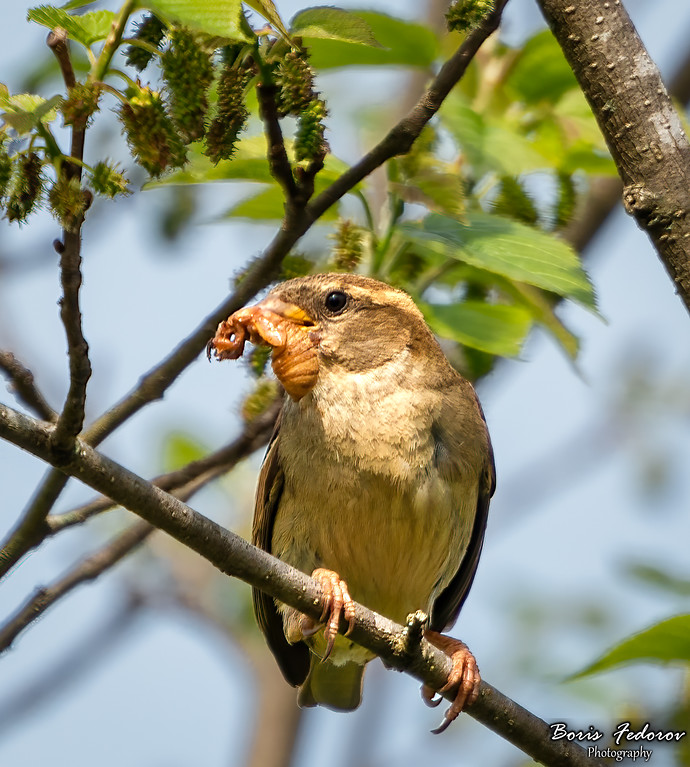
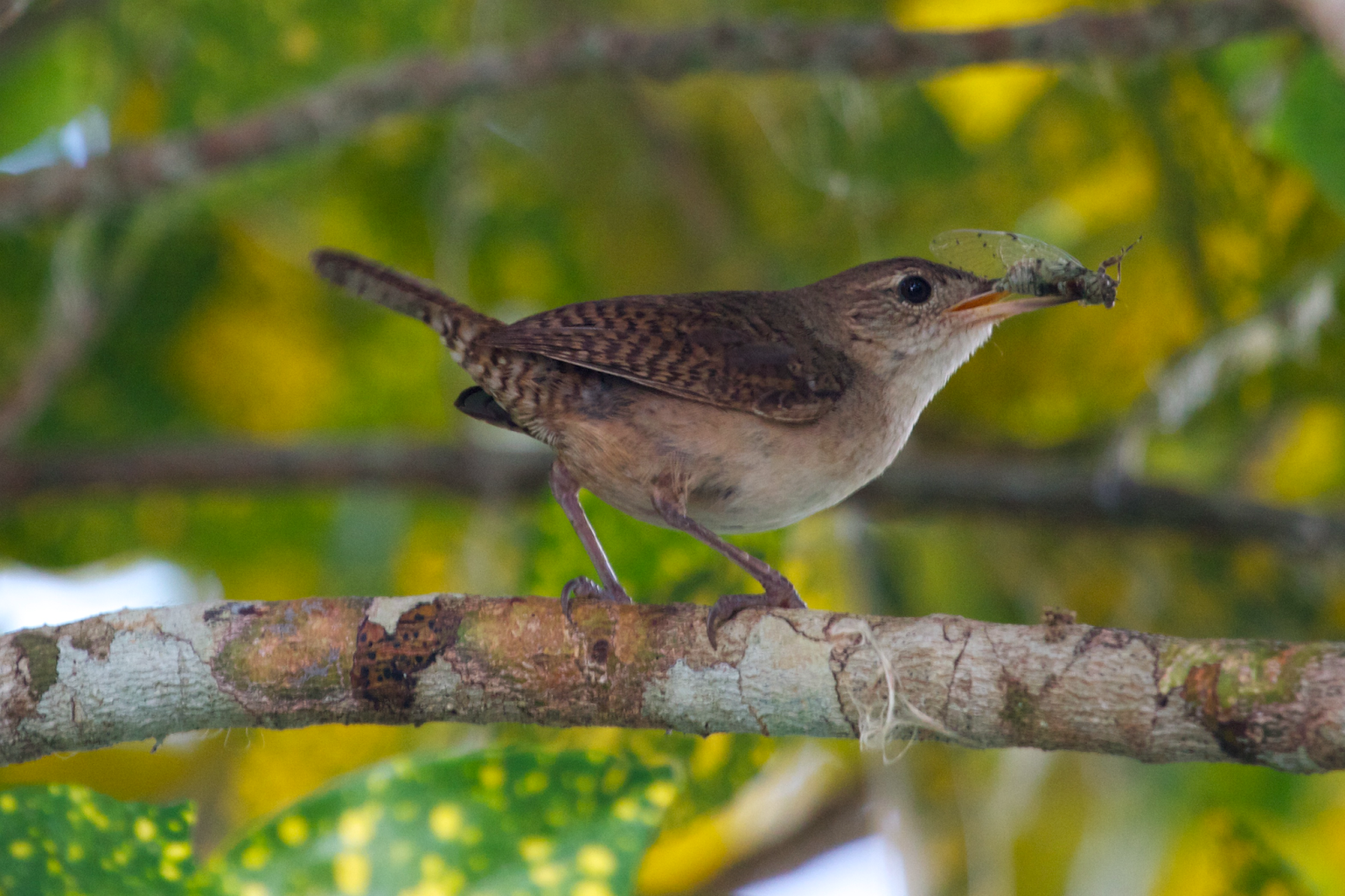
- Do you have a picture of predation on periodical cicadas you wish to share? If you agree that we can use your image with attribution to you, you can upload your image here.
Further details
- We invite participants from the following states where periodical cicada emergences are anticipated in 2024: AL, AR, GA, IA, IN, IL, KY, LA, MD, MO, MS, NC, OK, SC, TN, VA, WI. To get a better sense for where cicadas are anticipated within these states, check out the cicada mapping project pages for Brood XIII and Brood XIX.
- Feel free to watch birds in any kind of habitat including, but not limited to, back yards, city sidewalks, or deep woods. Feel free to watch from your window!
- Only enter a bird foraging observation if you’re close enough to observe the bird’s beak.
- Feel free to observe birds at any time. Birds may be more active in the morning from 5:30-9 a.m.
Data Sheets and Submission
- If you will be recording a small number of observations on a given day, you may prefer to use the data entry form here. The data will be submitted to us every time you hit submit.
- If you plan to do many observations you may find it easier to use this Google Sheet. Click File ->Make a copy.
- If you would prefer to print a data sheet or use Excel, you can access them here:
- If you record your data on printed paper, please transcribe your data onto the Google Sheet provided above. It can be hard for us to read everyone’s handwriting, and we are very busy collecting data ourselves. If you are unable to transcribe the data onto the sheet above, you can scan your data sheet or take a picture of it and send it to CicadaBirdFeast@gmail.com. If you are collecting data on a Google Sheet, please share it with us when you are done collecting data. If you are submitting untranscribed data sheets, send them to us once per week. Please submit all of your data by July 15 at the latest.
Contact
If you have questions, check out our FAQ below. You can also contact us with questions or concerns at CicadaBirdFeast@gmail.com. If you take any photos of birds eating cicadas, or have any other records of birds feeding on cicadas, feel free to send them our way! We would love to see them.
Data Entry Guidelines
| Field | Notes on response |
| Name or code | Enter your name or code name to the extent you are comfortable sharing. |
| Include an email address if you want to learn the results of the study. | |
| Date | Date should be entered in the format MM.DD |
| GPS coordinates or address | To generate a GPS coordinate, you can open Google Maps, zoom into your location, hold (don’t tap) a finger on the screen (or left click and hold down on your mouse or touchpad) to drop a pin at your location, and read coordinates that appear in the search bar. Be sure to enter it exactly as you read it. Different coordinate formats can look similar but refer to different places. 12° 34′ 56.7″ is different from 12° 34.567′ which is different from 12.34567°. |
| Bird Species | Only record birds you can identify. Either the common name or scientific name is fine. |
| Bird ID Certainty | How confident are you in the bird identification? – Certain. I know this species. – Confident. It’s likely correct, but there are several similar birds in the area, or the female or juvenile plumage is harder to pinpoint, etc. – Probable. It’s my best guess based on color, size, or behavior, but I didn’t get a great look at it. – Tossup. Maayyybee? |
| Habitat | If possible, select one of the following: wetland, forest, field, yard (includes managed lawns like golf courses or soccer fields), urban (e.g. city streets, parking lots), or ag (e.g. farms and orchards). If one of these options doesn’t accurately describe the habitat you observe, choose other and explain in the notes. |
| Foraging location | Within the habitat, where is the bird foraging? If possible, select one or more of the following: ground, foliage (branches or leaves on trees or bushes), aerial (in the air), water (in a body of water), or bark (tree trunk). If one of these options doesn’t accurately describe the foraging you observed, choose other and explain in the notes. |
| Notes | Feel free to add notes to explain entries, or to add anything you think might be relevant or interesting from your observation. |
 Periodical Cicadas